The Quiet Warning
Last night I received a freeze warning notification on my phone. You could almost feel the impending cold settling in, the kind that seeps through the air before it ever touches the skin. A freeze warning is set in place to alert us that temperatures will drop below freezing, causing potential harm to plants, crops, and outdoor plumbing. It’s a nudge to take action, to prepare before the cold has the chance to cause damage.
But as I stared at that small notification, I couldn’t help but think about how a freeze warning is also a metaphor for life—especially in the world of first responders and their families.
Life’s Whisper Before the Storm
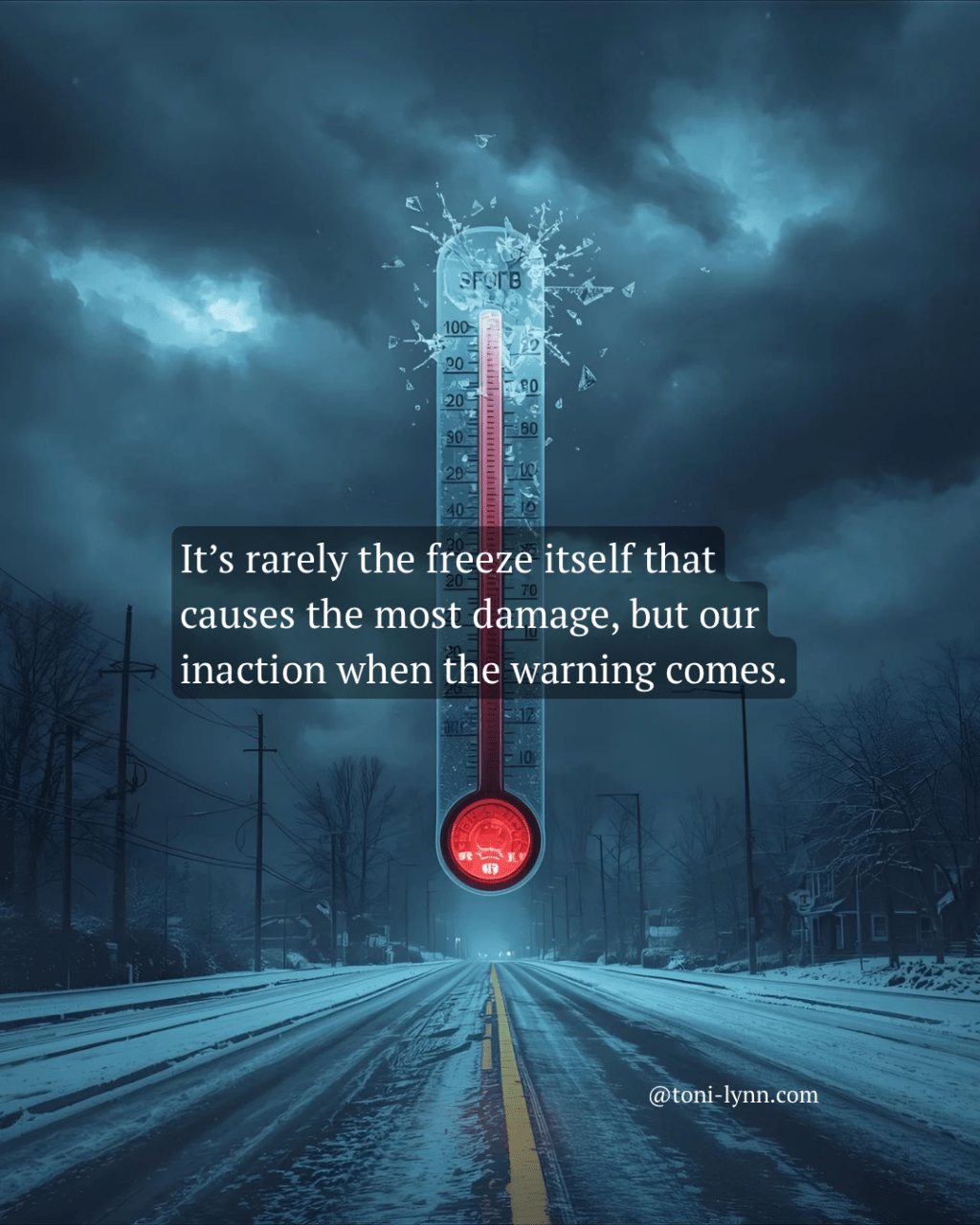
A freeze warning is life’s quiet whisper before the storm, a gentle caution that something cold is coming. It offers us a choice: to protect what matters or to stand still and hope we are spared. It’s rarely the freeze itself that does the most damage, but our inaction when the warning comes.
In the responder world, we often feel the temperature shift before the storm hits. A heavier tone after a hard call. A shorter fuse after a long shift. A silence that lingers when words won’t come. These are our emotional forecasts—the subtle signs that the cold is coming and that both the responder and those who love them need tending.
Covering the Roots
When we choose to prepare, we cover our roots, tend to the fragile things, and make space for warmth to remain even as the temperature drops. Preparation doesn’t always look dramatic. Sometimes it’s checking in with your spouse after a long week, asking what they need instead of assuming they’re fine, or taking time to care for your own heart instead of waiting for calm to arrive.
When we ignore the signs, we often wake to find what once thrived now brittle and broken, not because the cold was too strong, but because we assumed our strength would carry us through without tending to what mattered most.
The Subtle Signs
Freeze warnings in life rarely come with flashing lights or loud alarms. They show up in subtler ways: exhaustion that lingers, distance that grows, a heaviness that feels too familiar. They arrive in the late-night quiet after a difficult shift, or in the stillness of a spouse waiting for the garage door to open, bracing for which version of the day might walk through the door.
These moments are not meant to stir fear, but to awaken care. They are gentle invitations to pause and protect the fragile places—our hearts, our connection, our shared purpose.
Tending Before the Frost
Like a gardener who shields her garden before the frost, we too can tend to our hearts, our relationships, and our sense of mission before the cold arrives. When we do, foresight becomes resilience and preparation becomes quiet strength, the kind that endures long after the frost has passed.
For first responder families, this tending might look like building rituals of reconnection after shifts, having honest conversations about what’s heavy, or creating small moments of warmth that remind you both of why you endure the cold together. The freeze itself isn’t always destructive. It’s only destructive when we fail to prepare, when we ignore the signals that invite us to act.
The Cost of Ignoring the Signs
So often, we dismiss the early warnings. We tell ourselves the exhaustion will fade after this busy season, that the disconnection will mend when things slow down, that our burnout will ease once this case closes or that call is behind us.
But those are the warning signs—the subtle alerts that the temperature is dropping and something needs our attention. The longer we ignore them, the more damage they cause beneath the surface. What could have been preserved with care becomes brittle with neglect.
A Call to Listen
The next time a freeze warning comes, whether through your phone, your body, or your own spirit, pause long enough to notice what it’s really saying. Maybe it’s not just about the weather outside, but the climate within—the emotional atmosphere between you and the one who carries the badge, the turnout gear, or the weight of service.
Because sometimes the greatest act of strength isn’t enduring the cold, but preparing for it together.
Where are you feeling a freeze warning in your own life right now? Is it within your marriage, your family, your spirit, or your sense of purpose? What simple act of care could you take today to protect what matters most before the cold sets in?


 Toni Lynn
Leave a comment