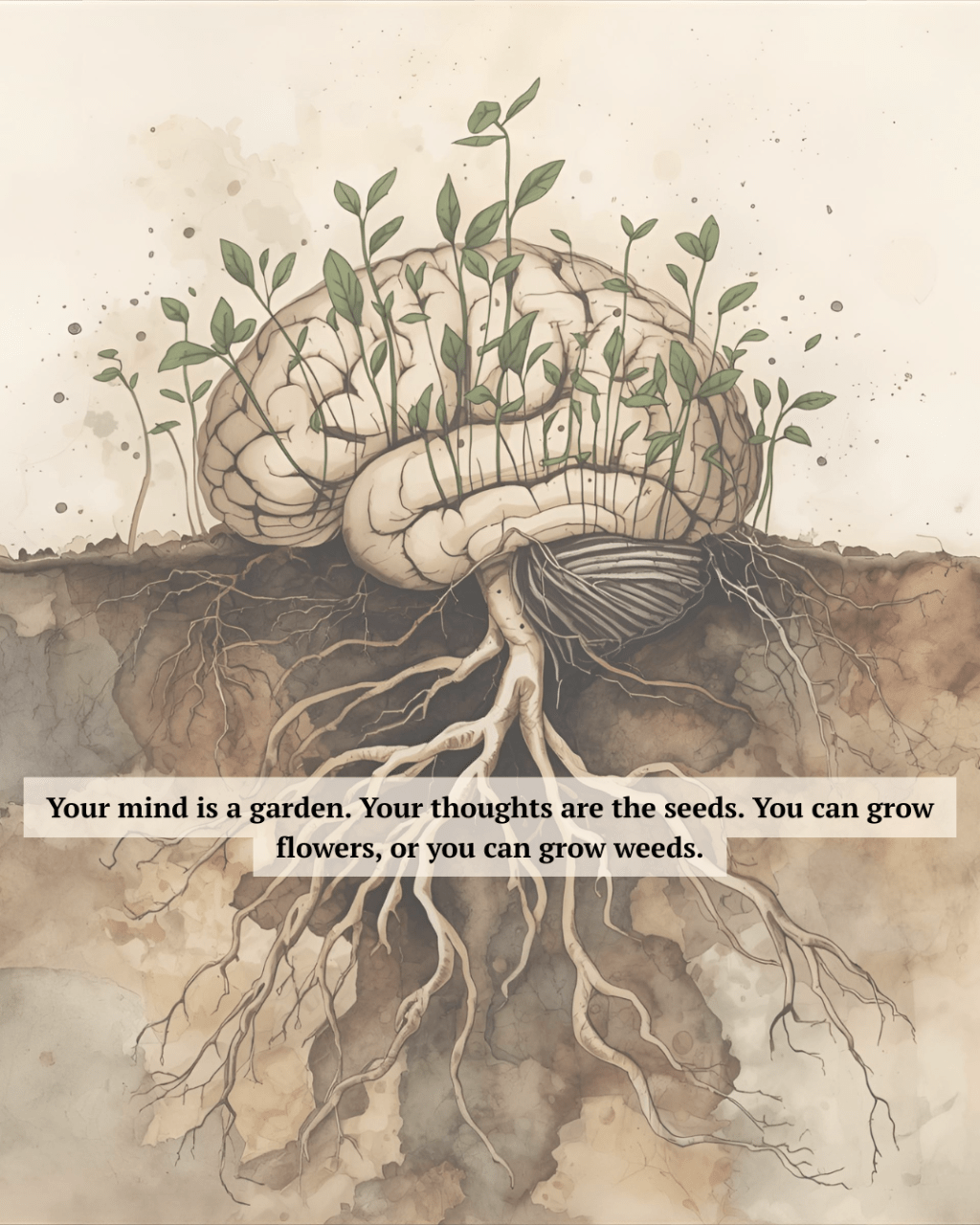
I was recently revisiting an article I had first read many years ago, titled Mindfulness: Who is Tending to Your Mind Garden? by Dennis Merritt Jones, D.D. In the article, Jones tells a story about finding a large weed in his second-story herbal flower box. There were countless ways the seed could have ended up there, but the point wasn’t how it got there. The real question was how it had grown so large without anyone noticing. The answer? Because no one had tended the garden box for a few weeks. The soil doesn’t discriminate against seeds; it simply provides a home for whatever is planted to grow and flourish.
Jones draws a compelling parallel to our minds. Like the soil in that flower box, our minds do not discriminate against the thoughts we hold. They allow all thoughts—good, bad, or indifferent—to take root and grow. Our subconscious doesn’t know the difference between constructive and destructive thoughts, so any thought given space will flourish if left unchecked.
According to research shared by Sandy Loder, humans have roughly 60,000 thoughts per day, and what is particularly concerning is that 75% of these thoughts tend to be negative, while 95% are repetitive. Many of these negative thoughts are driven by the fight-or-flight part of our brain, which is hardwired to scan for danger and protect us. While this instinct is critical for survival, the constant barrage of negativity and repetition can weigh heavily on our mental health, happiness, and overall quality of life.
Jones emphasizes that the only way to avoid “mind pollution” is to consciously choose what we plant in our mental gardens. For families of first responders, this practice becomes essential. When our first responder walks out the door, we often feel that gut-wrenching, “Will this be the last time we say goodbye?” fear. That fear is real and valid—it’s part of the reality of this lifestyle. But we have a choice in how we navigate it.
We can either give that fear weight, letting it take root and grow the weeds of worry and anxiety, or we can acknowledge it, honor it, and intentionally reframe our focus. We can remind ourselves of what we know to be true: that our responders are trained, skilled, and committed to coming home at the end of their shift.
As first responders and those who love them, it’s easy to become consumed by negativity, resentment, or disappointment. These feelings are real and deserve acknowledgment, but it’s equally important to recognize that we have a choice in how we allow our thoughts to grow. Mindfulness practices, mental wellness routines, and intentional thought management are some of the most important work we can do for ourselves and our families.
Suicide Prevention and Beyond
September is Suicide Prevention Month, and conversations like this are crucial. But tending to our mind gardens is not just a practice for one month out of the year—it is a lifelong necessity. The seeds of despair, hopelessness, and fear can creep in at any time, not only in September. Suicide prevention requires us to be vigilant caretakers of our thoughts and mental health every day, in the months and years ahead.
When we choose to notice what is growing in our minds, we can stop weeds before they overtake us. By practicing mindfulness and intentionally cultivating hope, gratitude, and connection, we create mental spaces where despair has less power to thrive. Suicide prevention is not only about recognizing crisis points but also about strengthening resilience and nourishing our inner gardens long before crisis takes root.
It is the daily choices—checking in with ourselves, tending to what is healthy, reaching for support when needed, and planting new seeds of hope—that make the difference not just in this month of awareness but in the ongoing seasons of our lives.
How to Tend Your Mind Garden
So, how do we tend to our mind gardens in a way that supports long-term resilience? Here are some practical strategies:
- Plant seeds of positivity: Cultivate gratitude practices and affirmations that uplift and center you.
- Set boundaries for mental space: Weed out negative influences, and redirect destructive or harmful thoughts.
- Nourish your mind intentionally: Consume uplifting content, prioritize restorative sleep, eat nourishing foods, stay hydrated, and practice meditation or other calming techniques.
- Practice daily awareness: Pause to notice your thoughts without judgment. Identify which “seeds” you want to grow and which you want to remove.
- Stay connected: Build relationships with people who remind you of your worth, strength, and hope. Connection is one of the strongest protections against despair.
Our minds are like fertile soil, ready to grow whatever we plant. The question is: what are we choosing to nurture? As first responder families—or anyone navigating life’s challenges, we have the power to cultivate a garden filled with strength, hope, and peace. Suicide Prevention Month calls us to awareness, but the true prevention work happens in the quiet, everyday moments of tending our thoughts. By committing to this work beyond September, we can create lives rooted in resilience rather than fear, and joy rather than negativity.
Take a moment to journal: If your mind is a garden, what seeds have you been planting lately? Are they helping you grow, or are they taking root as weeds? What intentional steps can you take not only this month but in the months and years ahead to nurture a thriving and hope-filled mental garden?
https://www.huffpost.com/entry/mindfulness-practice_b_1560254
https://insights.peak-dynamics.net/post/102ia4i/the-impact-of-45-000-negative-thoughts#:~:text=According%20to%20research%2C%20the%20average,fight%20part%20of%20our%20brain.1





 Toni Lynn
Leave a comment